




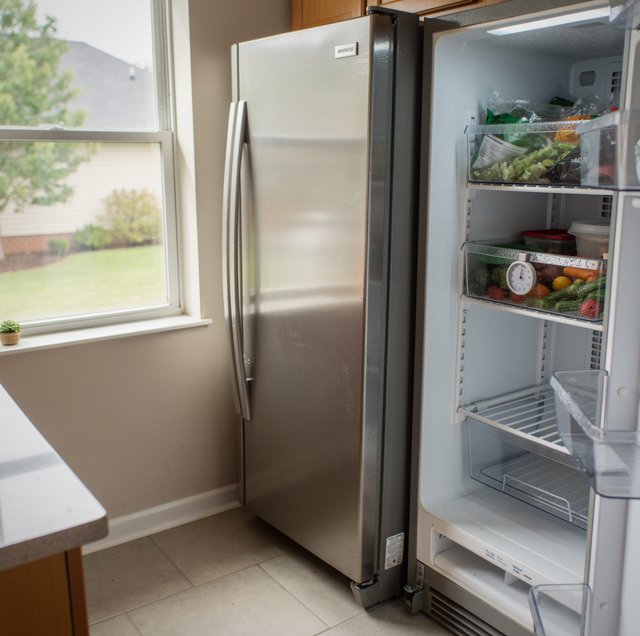
Three questions decide what a warm fresh food side with a cold freezer comes down to. First, is the freezer still holding its normal temperature, or has it started to creep up as well? Second, is cold air coming out of the vent that feeds the fresh food compartment, or is that opening still and silent? Third, is there frost or ice building on the back wall of the freezer, where a panel hides the cooling coil? Those answers narrow the list of suspects to one or two possibilities and indicate whether the repair is inside the refrigerator's sealed system or outside it.
A Cold Freezer Points Away From the Sealed System
On a refrigerator built around one evaporator, the layout of a standard freestanding top-freezer or side-by-side model, all the cold is made in one place. The compressor pumps refrigerant through the evaporator coil, which sits behind a panel at the back of the freezer. The fresh food side has no cooling coil of its own; it gets its cold secondhand, as freezer air is pushed through a duct.
If the freezer is sitting at 0 to 5 degrees Fahrenheit, the compressor is running, and the refrigerant is circulating well enough to make it cold, then the sealed system (compressor, condenser, evaporator, and the refrigerant lines between them) drops to the bottom of the list. Whatever is wrong sits in the path that carries that cold air into the fresh food side, and that path has three working parts: the evaporator fan that pushes the air, the defrost system that keeps the coil clear enough for air to pass, and the air damper that meters how much reaches the fresh food compartment.
Evaporator Fan: The Part That Moves the Cold
The evaporator fan is a small motor with a plastic blade, mounted behind the rear panel inside the freezer, right beside the coil. It pulls air across the coil and pushes it two ways: back into the freezer and up or across the duct into the fresh food side. When it stops, the freezer stays much colder than the fresh food side because the coil is in there with the food, but nothing carries cold air through the duct. The fresh food side warms steadily, with only the chill that seeps through the divider wall holding it back.
A failing fan gives a few signs before it quits. Worn bearings make a squeal or a growl from behind the freezer panel that comes and goes as the motor warms up. A blade that has picked up frost or ice makes a rhythmic ticking or chirping as it brushes the obstruction on every turn. A seized fan makes no sound at all.
On electronic-control models, the main control board powers the fan, and a board fault can leave a good motor sitting still, which is why a fan diagnosis checks for power at the fan plug before anyone orders a motor.
Leave the rear freezer panel to a technician. Behind it sit the defrost heater wiring and thin evaporator tubing, and chipping ice off that coil with a knife or screwdriver can pierce a refrigerant line and end the repair.
Defrost Faults and the Ice Wall
Every time the freezer door opens, humid room air gets in, and the moisture in it freezes onto the coldest surface in the cabinet: the evaporator coil. Left alone, that frost would seal the gaps between the coil's fins. At intervals measured in hours of compressor runtime, the refrigerator shuts off the compressor and fan and switches on a defrost heater mounted on the coil, which melts the frost. The water runs down a drain trough and out to a pan under the cabinet, where it evaporates.
Three parts run that cycle: the defrost heater on the coil, a defrost thermostat that ends the heat once the frost is gone, and a defrost control, a timer or part of the board, that decides when a defrost starts.
When one of those three stops a defrost from running, the coil never clears. Frost builds a little more each day until a solid wall of ice blocks the fins. The freezer stays cold for a while because the iced coil still sits inside it, but the fan can no longer push air through to the duct. The sign you can see is frost on the panel at the back of the freezer, or a sheet of ice on the panel, or frost creeping out of the vent openings in that panel.
Because the ice takes days to build, a defrost fault warms the fresh food side gradually; a dead fan cuts airflow the moment the motor stops.
If the back of the freezer is coated in ice, keep it plugged in and call before trying to melt it. A heavily iced coil turns into a lot of water at once, more than the drain trough and the pan beneath the refrigerator can carry, and it ends up on the floor.
The Air Damper Between the Compartments
The damper sits where the duct enters the fresh food compartment, behind the control housing at the top of the fresh food side on a top-freezer model, or high in the divider wall on a side-by-side. Its flap opens and closes to meter the cold air.
On models with dials, the damper is mechanical: a flap linked to a control that reads temperature through a sensing tube or bellows. In electronic models, a small motor drives the flap to open and close on a signal from the board. A mechanical damper can stick when ice forms in its opening; a motorized one can stop closed when its motor or gearing fails.
A damper stuck shut looks the same as a dead fan from the outside. The difference shows up when you listen and feel: with a failed fan, there is no fan sound from the freezer and no air anywhere. With a stuck damper, the fan runs and blows cold air around the freezer, but nothing reaches the fresh food vent.
Checks Worth Making Before You Book
A few causes need no tools to rule out. The table below pairs each clue with the part it points toward. None of these are certain on their own; they narrow the list.
| What you notice | What it points toward |
|---|---|
| Freezer at 0 to 5 F, no fan sound, no air at any vent | Evaporator fan motor or its power from the board |
| Frost or ice on the freezer's back panel or vents | Defrost heater, defrost thermostat or defrost control |
| Fan runs, and the freezer air is cold, nothing reaching the fresh food vent | Air damper stuck closed, or ice in the duct |
| Freezer creeping warmer along with the fresh food side | Condenser airflow or the sealed system |
Vents: Look for a tall bottle or a packed shelf pressed against the opening where cold air enters the fresh food side, and the return vent where it leaves. Blocked vents can warm one shelf or one corner, and they cost nothing to clear.
Dials: Some top-freezer models with two dials operate unexpectedly: the freezer dial adjusts the damper, splitting the cold air between the two sides, while the fresh-food side dial sets how long the compressor runs. Turning the freezer dial to its coldest setting on one of those models can starve the fresh food side. Check that nobody has moved either dial, and give the cabinet a full day to settle after any change.
Doors: A gasket that has folded, torn, or pulled away lets humid air in all day, loading the coil with more frost than a normal defrost cycle clears. Run a hand around the seal of both doors and look for gaps at the corners and along the hinge side.
Sound: With the doors shut and the compressor running, listen at the freezer for the soft whoosh of a fan behind the panel. Silence there puts the fan or its power supply first on the list.
If the Freezer Starts Drifting Too
Once the freezer starts warming as well, the picture changes. Ice cream softening, a freezer reading well above 5 degrees, and a fresh food side that has gone warm together point outside the air path: either the refrigerator is failing to reject heat at the back, or the sealed system itself is losing its ability to make cold.
Heat rejection happens at the condenser, the coil at the back or underneath the cabinet, with a condenser fan beside the compressor that draws air through it. A stopped condenser fan or a coil matted with dust and pet hair leaves the compressor running long and hot while producing less cold air, and both compartments drift together. Those are repairs outside the sealed system, and where the refrigerator lives changes how much weight they carry. One parked in a garage, or in a home with no air conditioning, works through longer run cycles during a long, hot summer, and garage dust settles on the condenser coil faster than kitchen air does. A freezer drifting a few degrees in that setting can trace back to a loaded coil or a tired condenser fan. The same drift in an air-conditioned kitchen, with a clean coil and a spinning fan, leaves fewer outside explanations.
When the condenser side checks out, the back panel is free of ice, and both compartments are still warm with the compressor running, the fault points inside the sealed system are a compressor that runs without pumping or a refrigerant leak. That is a different kind of job from a fan or a defrost part, and it goes to a refrigeration specialist.
The order of the three questions matters more than any single part. A freezer that is still cold keeps the problem small and outside the sealed system, and the frost on the back panel and the sound from behind it narrow it to one part. Read those clues before anyone pulls a panel, and the repair starts in the right place.
Frequently Asked Questions
Check it with a thermometer in a glass of water left on a middle shelf for a few minutes. Perishables such as milk, meat, leftovers, and cut fruit that have sat above 40 degrees Fahrenheit for more than two hours belong in the trash; hard cheeses, butter, condiments, and whole fruit tolerate it far better.
That pattern is a strong sign of a defrost fault. While the power is off, the ice on the evaporator melts, airflow returns, and the fresh food side recovers. With the defrost heater, thermostat, or control still faulty, the frost rebuilds over the next several days, and the warm fresh food side comes back.
On models with a freezer door switch wired to the fan, that switch cuts the evaporator fan so it does not blow cold air out of an open freezer. That switch has its own failure: a plunger that sticks in, or contacts that wear, can leave the fan off with the door closed, producing a warm fresh food side with a perfectly good fan motor.
On a single-evaporator bottom-freezer, yes, though the cold air travels upward through a duct in the back wall to reach the fresh food side, and ice can form in that duct itself. Some models carry a second evaporator for the fresh food side, and on those a cold freezer says much less about the other compartment.
Yes, on electronic models. A thermistor in the fresh food compartment reports the temperature to the board via changes in electrical resistance. One that has drifted out of range can tell the board the compartment is colder than it is, so the board never opens the damper or calls for air. It is tested against a resistance-to-temperature chart.
It does not help, and on a defrost fault it can hurt. With the coil iced or the air path blocked, a colder setting only keeps the compressor running longer, which drives the freezer colder while the blocked path still keeps that cold out of the fresh food side. Leave the settings where they were so the technician sees the fault as it is.
Book a diagnosis while the freezer is still cold — finding the fan, defrost part, or damper that stopped the air keeps the repair outside the sealed system. Tucker Appliance Repair serves Gardendale and the Greater Birmingham area. Call (205) 883-9703.