




What People Actually Say When They Call About an Oven or a Range
Ovens and cooktops are really two machines sharing a cabinet, and the calls split cleanly along that line.
What Fails, and Why
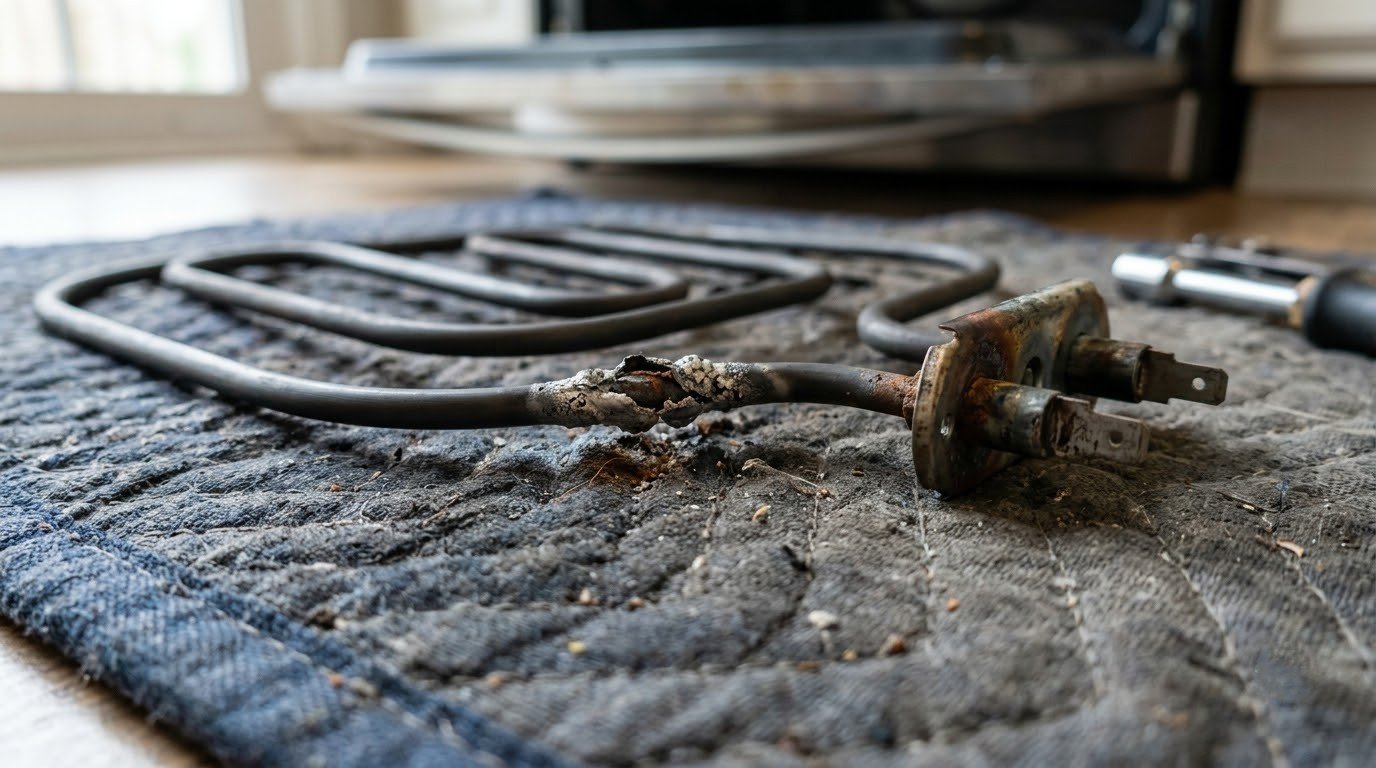
Six faults account for most of what goes wrong across the oven and the cooktop, and the first one you can often diagnose yourself by looking.
What a kitchen adds to the job
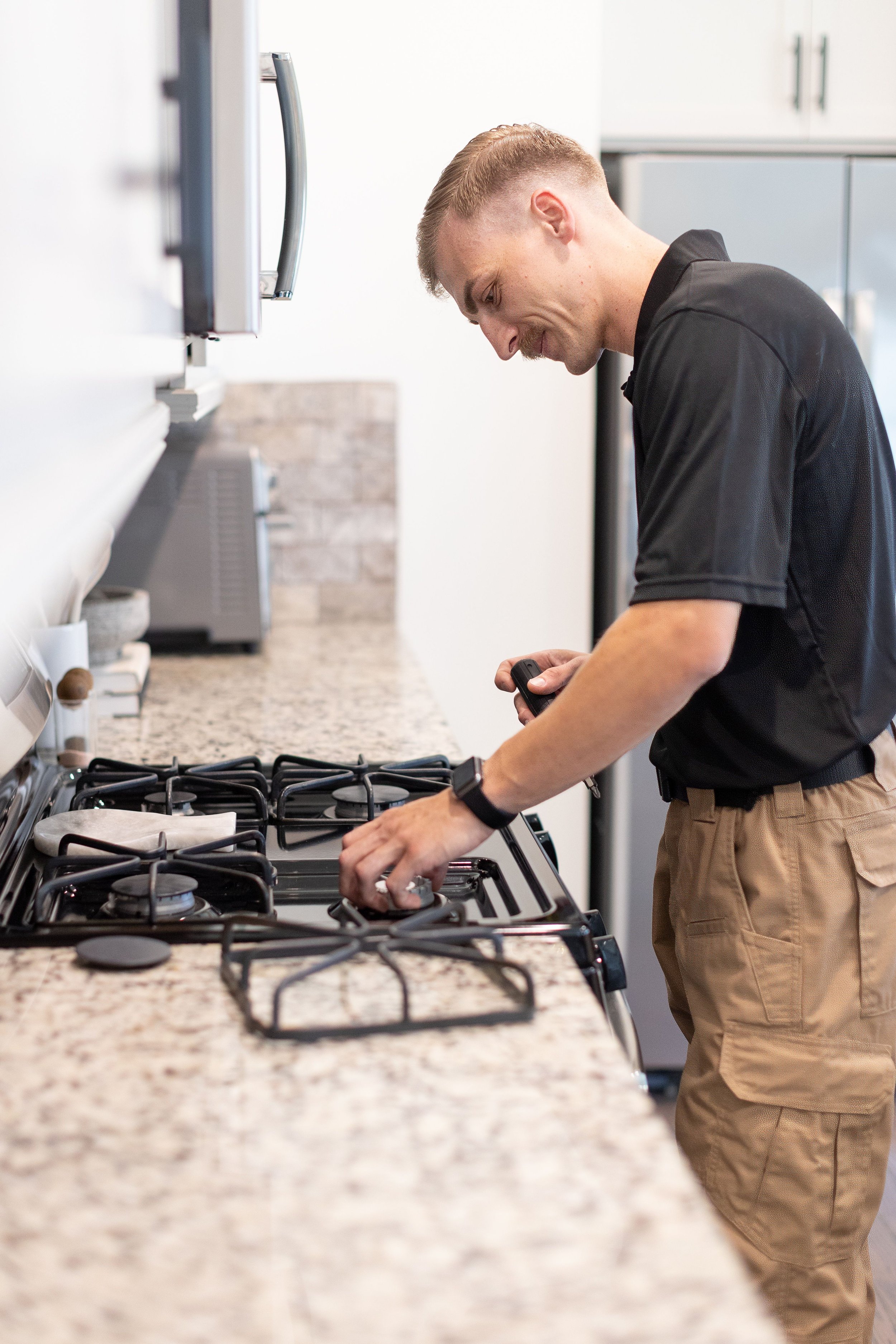
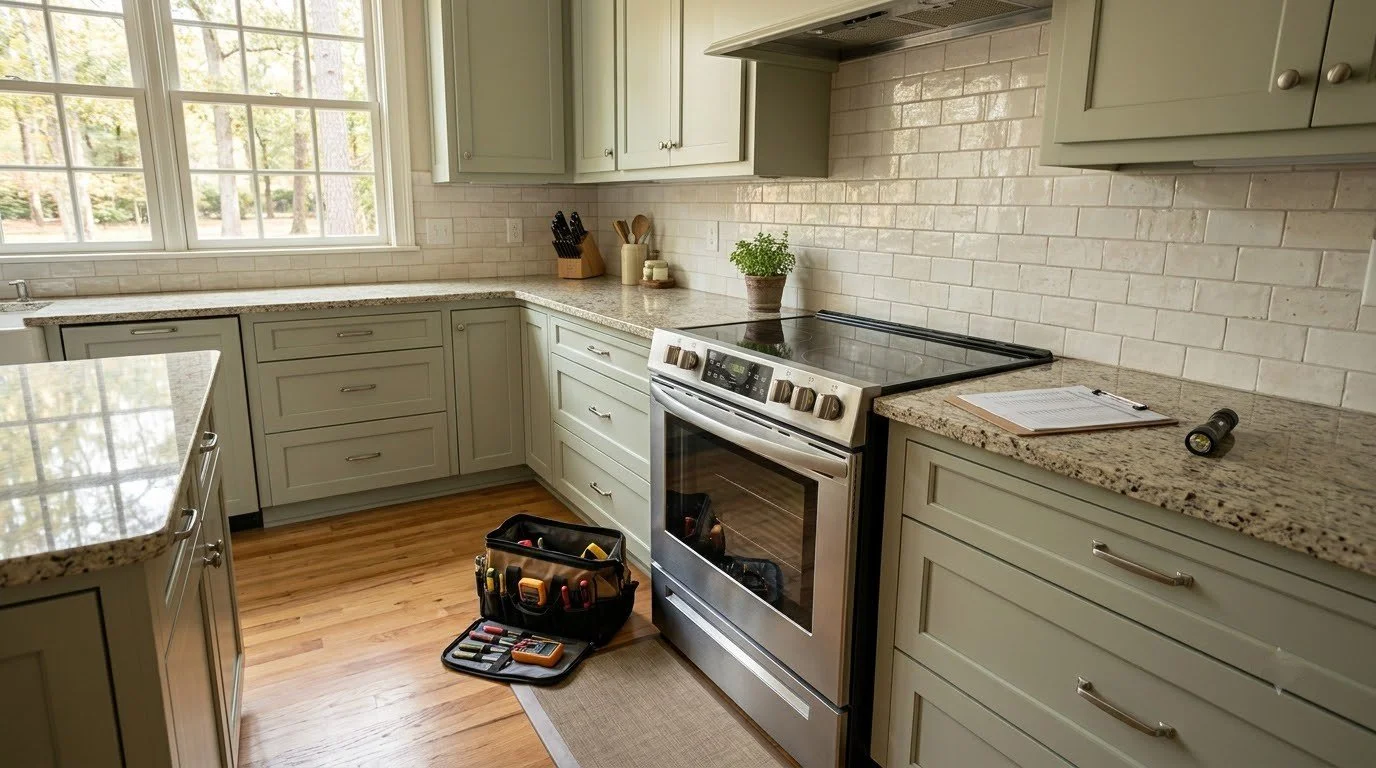
Ranges are heavy, they sit in a slot with a tight fit, and the floor in front of one is usually the most expensive flooring in the house. Protection goes down before anything moves. On a slide-in range, getting the machine far enough out to work on it is a real part of the job rather than a preliminary to it. On a wall oven, describe the fault on the phone and Aaron will tell you whether it is a job he can take.
What We Fix on an Oven, Range or Stove
Repair or Replace an Oven or Range?
An element, an igniter, a surface switch or a sensor is a straightforward repair on almost any machine, and these are the faults that account for most of the calls. None of them is a reason to buy a range.
The one that turns is a control board on an older machine, and ranges are where that decision arrives most often, because a board is a larger share of a range's replacement cost than it is of a washer's. On a range with real age on it, a confirmed board usually points at replacing.
Ranges and ovens also have the widest replacement price spread of anything in a kitchen, which makes the standard half-the-cost rule harder to apply. A repair that's obviously worth doing against a mid-range replacement can look marginal against a budget one, and that comparison is worth making with real numbers and not an instinct.
The same question on every other appliance→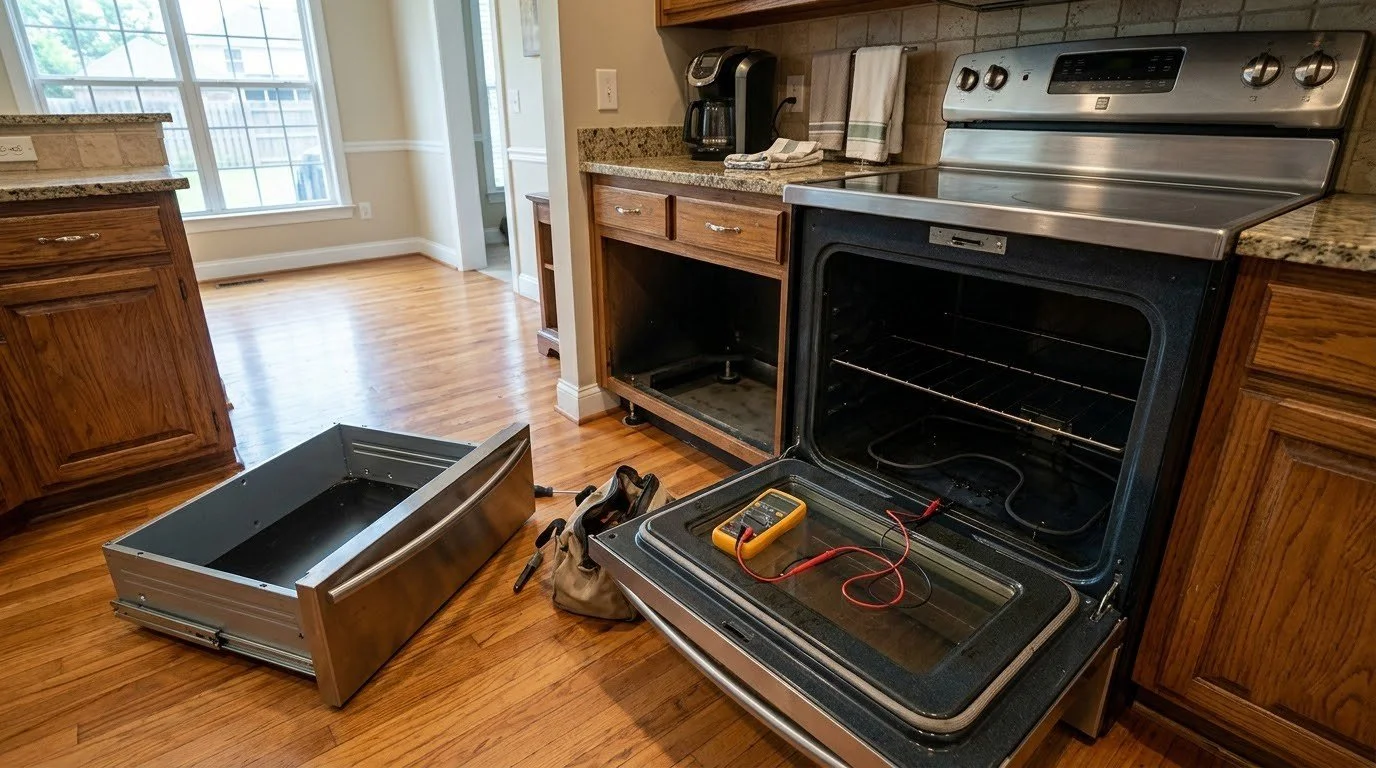
What It Costs
$100 service call, applied to the repair. It comes off the repair if you go ahead within thirty days. After thirty days, a return visit is a further $50 to $100.
No published repair prices. On this appliance the range would be almost meaningless: a surface element switch and a control board on a slide-in range are the same machine and different orders of money.
One all-in figure before any work starts, covering parts, labor, tax and the service call. What moves it is which part, and how far the machine has to come out of its slot to reach it.
Exclusions to the 90-day warranty are listed in full on the FAQs.
How the Visit Goes
The Gas Oven That Clicks and Won't Light
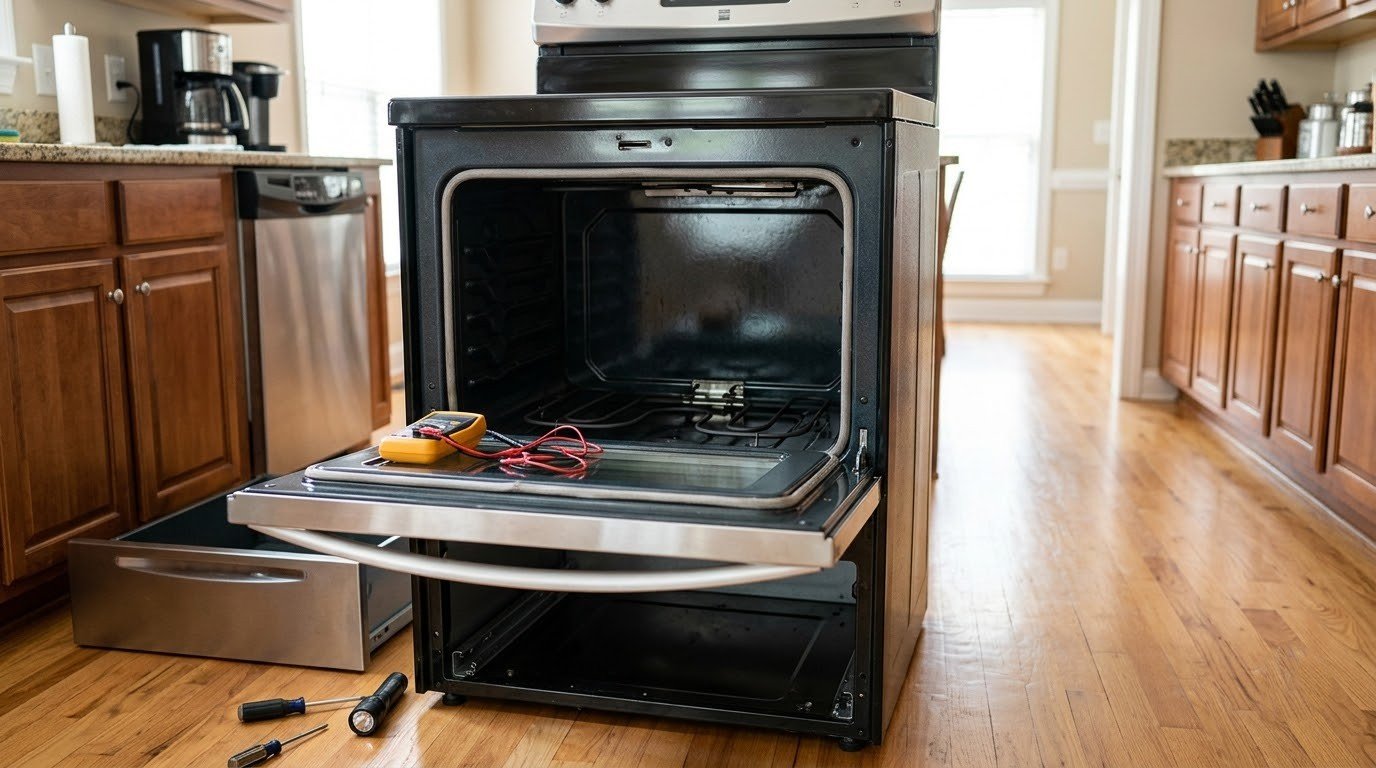
A gas oven that clicks and won't light, with a smell of gas, is a genuinely common call, and plenty of people assume it needs the gas company and a large bill. Usually it needs an igniter, and that job sits on the electrical side of the appliance: the igniter is a component that has to reach a temperature, the diagnosis is metering a harness for power, and the repair is swapping a part. Knowing which of those you have is worth a phone call. The one thing worth saying plainly: if you can smell gas with everything switched off, or the smell is strong, that isn't an appliance call. Get out, call the gas company, and deal with the oven afterward.
What Customers Say
Every review Aaron has, live from Google, in the customer's own words and under their own name.
Questions We Get Asked
Do you work on gas ranges?
A gas range whose oven isn't heating, which is usually the igniter, is a job we take. For anything else on a gas range, call and describe it and you'll get a straight answer on the phone.
My gas oven clicks and won't light, and I can smell gas. Is that dangerous?
That specific pattern is usually a weak igniter and unburnt gas from the attempt, and it's a call we take. But if you can smell gas with everything switched off, or the smell is strong, treat it as a gas leak: get out and call the gas company first.
One burner works and the others don't. Is the whole cooktop gone?
Unlikely. A single dead burner is normally the element or the switch behind it, and both are modest repairs. It's the cheap end of this page, not the expensive one.
The oven heats but everything burns. Is that worth fixing?
Yes, and it's the fault people put up with longest. Sometimes the oven simply needs calibrating, which Aaron does. Where calibration doesn't hold it, the sensor or the control is next.
My oven smells like it's burning. Do I need a repair?
Usually not. It's normally food or grease buildup. Clean it first; if the smell survives a proper clean, then it's worth a look.
Do you do wall ovens?
Electric wall ovens, yes, as long as the repair doesn't need the oven pulled out of the cabinetry. Describe the fault on the phone and you'll get a straight answer before anyone drives out.
What brands do you work on?
Whirlpool, GE, Frigidaire and KitchenAid are the ranges we see most. If yours is something else, call and ask.
My cooktop glass is cracked. Can it be replaced?
Usually, but the glass is expensive enough that most people put the money toward a new cooktop. Both figures are on the cooktop page.
Can you come the same day?
Depends on the day. An early call and a free slot can mean today; more often it's tomorrow or the day after, and most people are fine with that. Eight in ten jobs finish on the first visit when the part is available locally.
What does the warranty cover?
Ninety days, parts and labor, on the repair we did. Not on a board we replaced, and not on a fault that shows up later somewhere else. Full exclusions on the FAQs.
The brands this comes up on most
Each of these has its own page with the faults, the parts reality and the model-plate location for that badge.
Where We Work, and How to Reach Us
Oven, range and stove repair across greater Birmingham, from Gardendale and the north-side towns through the city and out to the Over the Mountain communities. The full list is one click away.
Call or text (205) 883-9703. Tell us the brand, the model number, whether the machine is gas or electric, and whether the problem is the oven or the cooktop. Those four answers decide whether this is a job we can take and what part is likely to travel with us.
Calls and texts Monday to Friday, 8am to 5pm. Saturday calls are usually answered; Sunday goes to voicemail.
Every town we cover