




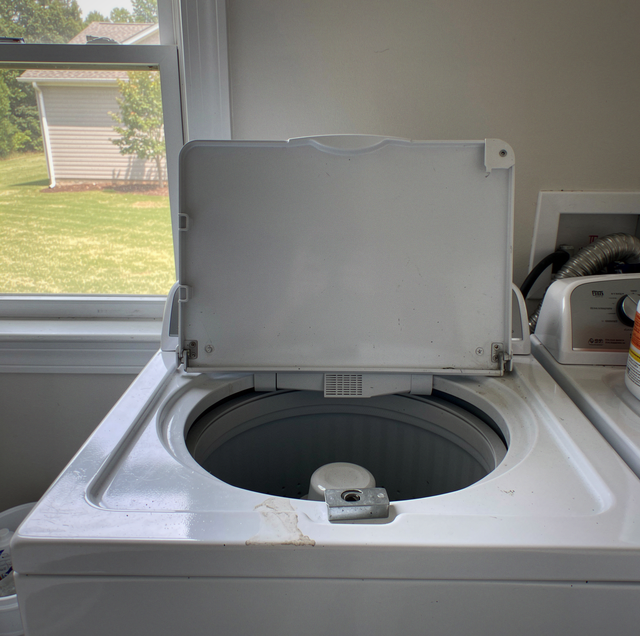
A top-load washer that sits silent with the lid shut and a full basket looks like a machine whose brain has died, and the control board takes the blame. The board may be working fine. It is waiting for one signal, "the lid is closed and locked," and that signal never arrives. Until it does, the board will not start the motor, and on some models it will not let the cycle get past its first few seconds. The part that sends that signal is the lid lock (or, on older machines, a plain lid switch), and it is a small assembly that is quick to test and to swap compared with the board. That is why the lock is tested first, and the board is condemned only when the evidence points to it.
How the Lid Lock Tells the Board It Is Safe to Run
On a modern high-efficiency top loader, the lid lock is a small assembly mounted under the top panel, near the front edge of the lid opening. Inside it sit two working parts. A solenoid (or a small motor on some designs) drives a plastic or metal bolt into a slot that holds the lid down. A switch inside the same housing reports whether the bolt has traveled into the locked position.
The control board reads both. When you press Start, the board energizes the lock, then checks the lock-position switch. If the confirmation comes back, the cycle proceeds. If it does not, the board retries and, after a few failed attempts, gives up, stops the cycle, and flags a lid lock fault. On some of these machines, the lid locks at the very start of the cycle, before the basket turns to sense the size of the load, so a lock that cannot confirm the stop condition stops the washer before anything you would recognize as washing begins.
Older top loaders without a locking lid use a simpler lid switch: a plunger or lever pressed down by a tab on the lid. It does not lock anything. It only tells the machine whether the lid is down, and the machine uses that to decide whether the motor may run.
Signs That Point at the Lid Lock First
A washer with a lid lock fault rarely looks completely dead. The display lights up, buttons respond, the cycle you picked shows on the screen, and then something stalls. The clues that steer suspicion toward the lock:
- A flashing lid-locked light: The board has asked for a lock and has not received confirmation.
- Repeated clicking from under the front of the top: The solenoid is firing, and the bolt is either not reaching its slot or the switch is not reporting that it did.
- A start that lasts only seconds: The washer hums or clicks, tries the load-sensing step and quits.
- A lid-lock fault code on the display: On machines that show codes, the code names the circuit the board is unhappy with, though a code points to a circuit, not to a specific failed part.
- Intermittent starts: the washer works if the lid is pressed down or closed a particular way, then refuses the next time.
Every one of these symptoms shows a board that is powered, awake, and issuing commands. That alone makes the board a less likely culprit than the lock it is commanding.
The Lid Strike and the Harness: Smaller Parts in the Same Chain
Two parts upstream of the lock assembly can produce the same symptoms, and both are smaller jobs still.
The lid strike: a plastic tab or hook on the underside of the lid that engages the lock when the lid closes. If it cracks, snaps off, or bends out of line, the lock bolt has nothing to engage, or the lock never senses that the lid is down. A broken strike is visible with the lid open and a flashlight, and it is worth a look before anything else.
The wiring harness: the lock's wires run from the front of the top panel back to the board in the console. Where they are clipped along the frame or pass through an opening in the top, they can chafe through, or a connector can work loose from the vibration of years of spin cycles. A broken wire or a half-seated plug cuts the confirmation signal as completely as a failed lock does.
Debris matters too. Lint, a sock string, or detergent crust packed into the lock opening can stop the bolt from traveling its full distance. Clearing the opening takes a minute, though it only fixes the fault when debris is the actual cause.
Signs That Point at the Control Board
Boards do fail, and some signs point toward them with real weight. None of them is proof on its own, but together they shift the odds.
A burnt patch: A scorched area, a browned spot on the circuit board, a melted connector or a cracked component, visible once the console is opened. A failed board sometimes shows this before a meter even touches it, putting the board squarely under suspicion.
No display at all with live power: If the outlet is proven live and the cord and plug are sound, a washer with no lights, no beep, and no response to any button has a problem somewhere on the control side, with the board in the frame.
Erratic behavior: Buttons that trigger the wrong function, a display that shows random segments, or a cycle that changes on its own point to the electronics rather than to a lock assembly.
A fault that survives a known-good lock: If the lock, strike, and harness test good and the board still does not send power to the lock when it should, the board is the part left standing.
If you smell hot plastic or see scorch marks through the console, unplug the washer at the wall and leave it unplugged. Opening the console and testing the board while it is powered is work for an appliance technician, not a homeowner.
That last test is the one that settles the question. A technician checks whether the board sends power to the lock when the cycle starts. Power present at the lock, with no lock action, indicates a fault in the lock assembly or something jamming its bolt. No power when the board should be sending it, with a good harness in between, means the board is bad.
Why Replacing the Board First Wastes a Part
Guessing the board first has three drawbacks, and they stack.
The first is the part itself. Installed electrical parts, including control boards, are generally not accepted back by parts sellers once they have been fitted, so a board bought on a guess and fitted to a machine with a bad lock stays bought.
The second is less obvious. A lid lock with a shorted coil can draw more current than the board circuit driving it is designed to handle. On some machines, that blows a protective fuse on the board or damages the output that feeds the lock. Put a new board into a machine with that shorted lock, and the new board can be damaged the first time it fires the lock. You end up needing the lock you skipped plus a second board.
The third is time. Boards are model-specific, and the right one depends on the full model number on the machine's plate, which decides whether a repair is one visit or two. A guessed board that turns out to be the wrong answer adds a parts wait on top of the wasted part.
The order that avoids all three: strike, opening and harness by eye, then the lock tested, then the board's output to the lock measured. The board gets ordered only when that output is missing.
Checks You Can Make Before Calling
A few checks need no tools and no panels removed, and they rule out the simple causes:
- Confirm the outlet is live: Plug a lamp into the washer's outlet. If the lamp stays dark, check the breaker at the panel; a dead outlet is a house wiring question, not a washer fault.
- Look at the strike: Open the lid and inspect the tab on its underside for cracks or a missing piece.
- Clear the lock opening: With the washer unplugged, look into the slot where the strike enters and remove lint or anything lodged there.
- Lighten an overstuffed load: A basket packed above the rim can push up on the lid and keep it from seating fully.
- Note what the washer does: Clicking, a flashing light, a code, a few seconds of humming or complete silence: each one narrows the search for whoever opens the machine.
If the strike is intact, the opening is clear, and the washer still clicks and quits, the next step is a meter test, and that belongs to someone with the panels off.
The washer that refuses to start is asking for one thing it cannot get. Find out what is blocking that one signal before replacing the part that is sending the request.
Frequently Asked Questions
No, and it should not be tried. On a modern locking lid, the board drives the lock and then waits for the lock-position switch to confirm the bolt has moved. Tampering with the lock wiring leaves the board without that confirmation and can damage the board's lock circuit as well. The lock is there to keep hands out of a basket spinning at full speed; a lock that will not confirm is a part to replace.
On some older top loaders with a plain lid switch, the fill valve circuit does not run through the switch, but the motor circuit does. A failed switch lets water enter the tub normally, then holds the motor off, so the machine fills, goes quiet, and sits with standing water. On those machines, a fill with no agitation, lid down and load-balanced, puts the switch and the tab that presses it at the top of the list for testing.
Yes. Some electronic washers have a control lock (sometimes labeled "child lock") that ignores button presses until it is released, and a padlock symbol on the display indicates when it is on. It is switched on and off by holding a specific button or button pair for a few seconds, and the label printed next to that button on the console shows which one. A washer that lights up but ignores Start is worth checking for this before anything else.
Not always. Some machines show a code on the display during the failed start; others only flash the lid-locked light. Certain top loaders also have a hidden service or diagnostic mode, entered through a button sequence specific to the model, that runs the lock through a test and recalls the most recent stored fault codes. The sequence varies across models, and on some machines, a folded service sheet tucked inside the console lists it.
On some top loaders, the board sends line voltage, about 120 volts AC, to the lock solenoid when it calls for a lock. That is why the decisive test, checking whether the board is sending power to the lock, is done with the machine powered and the console open. A technician makes that measurement with insulated meter probes; it is not a safe test while the washer is energized and the top is raised in a home laundry room.
Sometimes, and it is worth one try. Unplugging the washer for several minutes lets the board fully power down and clear a fault caused by a glitch, such as a brief power interruption mid-cycle. A worn lock, a broken strike or a damaged wire will bring the same fault straight back on the next start, so a fault that returns after a reset is a parts problem, not a memory problem.
Book a lid lock and board test before you buy any part — the lock, strike and wiring get checked first, so a control board is only ordered when its own output proves it failed. Tucker Appliance Repair serves Gardendale and the Greater Birmingham area. Call (205) 883-9703.