




Ice Maker Not Making Ice but Water Dispenser Works: Where to Look
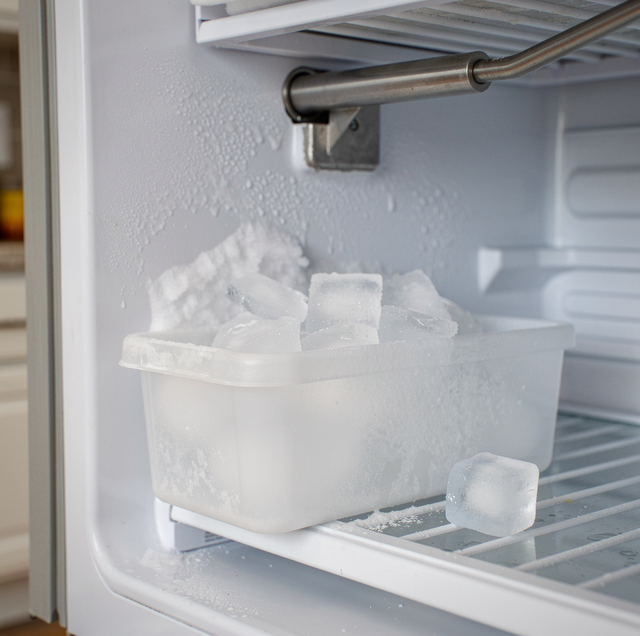
The bin under the ice maker holds a few clumped pieces and nothing new. Press the dispenser paddle and water still runs out clean and cold, the way it always has. No ice drops with it, though, and the sound the ice maker usually makes mid-cycle, a short motor run or a soft click from the back wall, has gone quiet.
Working water at the door is the one useful clue in this fault: it clears the house supply, the line into the refrigerator, and the dispenser side of the water inlet valve. What is left is narrower, limited to what only serves the ice maker: the ice maker's own outlet on that valve, its fill tube, its shut-off arm or optical sensor, the freezer's actual temperature, or the ice maker module as a whole. Most of the diagnosis comes down to one more detail: whether the output slowed over several days or stopped between cycles.
Water at the Door Still Means a Dead Ice Maker
On most refrigerators, the water inlet valve at the bottom rear has two solenoid outlets on one body: one feeds the line up to the door dispenser, the other feeds a separate fill tube that runs into the freezer and ends at the ice maker's fill cup. Each outlet opens on its own signal, so the ice maker's side of the valve can fail while the dispenser side continues to work.
A dead ice maker with a working dispenser points past the house supply and the dispenser side of the valve to the ice maker's own outlet and three more places: the fill tube, the parts inside the ice maker that call for each fill on a schedule, and the cold air around the whole assembly. Apart from that one outlet on the valve, none of them involve the plumbing behind the refrigerator, so moving or checking the house connection rarely changes anything.
A clogged filter that feeds both outlets slows the dispenser too, so a full-speed dispenser all but clears it. A slide-and-twist cartridge changes in about two minutes without tools; one that will not turn is overtightened, not clogged.
The Fill Tube Freezes Before Anything Else Fails
The fill tube running into the freezer carries a small amount of standing water between fill cycles. In a freezer that runs colder than it should, or on a unit where that tube sits close to cold airflow from the evaporator, that standing water can freeze solid inside the tube. The fill valve still opens on schedule, but nothing moves through the frozen tube, so the ice maker cycles without producing ice. A valve outlet that drips between fills, or a slow fill from low pressure, freezes the tube the same way.
This fault tends to show up as a sudden, complete stop rather than a slow decline, because the tube either carries water or it does not. A freezer that is otherwise working normally, keeping food hard and holding its usual temperature, with an ice maker that abruptly produces nothing, fits a frozen tube, and it fits a module, or the wiring that feeds it, that has failed outright just as well.
Keep hair dryers, heat guns, and flames away from a frozen fill tube: the ice maker's wiring and plastic fill cup sit beside it. Safely thawing it and finding why it froze are a technician's job with the panel off.
The Shut-Off Arm That Never Resets
Older ice makers use a mechanical shut-off arm that the rising pile of ice pushes up to stop the fill cycle; newer ones use an optical sensor that reads the same thing without moving parts. Both have a defined rest position for "keep making ice" and a separate position for "stop, the bin is full." A bag left in the bin, a stray chunk of ice wedged against the sensor, or an arm that was bumped out of place during cleaning can hold either one in the stop position even with plenty of room left in the bin.
This looks identical to a mechanical failure from the outside: no new ice, a working dispenser, a freezer that is otherwise cold. The difference is that nothing inside the ice maker has failed; the signal telling it to stop is stuck on.
A Freezer Running Too Warm Changes the Picture
An ice maker needs the freezer compartment running near the low end of its working range to cycle properly, while food several degrees above that will still stay frozen solid. That gap matters here: a freezer can feel cold enough by hand, and keep a bag of vegetables rock hard, while running too warm for the ice maker's fill logic to proceed.
A freezer running warm traces back to a short list of parts: a weak evaporator fan not moving enough cold air past the ice maker, a door seal that lets warm air in each time it opens, or a defrost cycle that is not clearing frost the way it should. None of those are plumbing or fill-side parts, which is why fixing the ice maker alone does not resolve this version of the fault.
If food is softening throughout the freezer and the fresh-food side is warm too, the cause could still be an evaporator fan or a defrost fault, or it could be the sealed refrigeration system, which is a different repair handled by a refrigeration technician.
Gradual Decline Versus a Sudden Stop
Gradual decline: cubes get smaller, the bin fills more slowly than it used to, or output drops over a week or two before stopping altogether. Sudden stop: a bin that was filling normally on Monday produces nothing by Wednesday, with no slow fade in between.
The table below lines up each pattern with its more likely cause.
| Pattern | More likely cause | What usually follows |
|---|---|---|
| Gradual decline over days or weeks | Mineral buildup narrowing the ice maker's side of the inlet valve | Cleaning or replacing the restricted part, not the whole assembly |
| Sudden, complete stop | A shut-off arm stuck in the stop position, a frozen fill tube, or a failed module or its wiring | Checking the arm position first, then the tube, then the module |
| Stop paired with a warmer freezer | Evaporator fan, door seal or defrost fault | Diagnosing the cooling side before the ice maker |
Where the household's water runs hard, minerals collect on the inlet valve and its line fitting; once it narrows the ice maker's side of the valve, each fill comes up short, and the cubes shrink over days, which is the gradual row in the table. On soft water, that deposit does not form, so the same slow fade points at the ice maker's own parts instead.
The Ice Maker Comes Out as One Assembly, Not a Part
Once the ice maker's side of the valve, the fill tube, the shut-off arm or sensor, and the freezer temperature are all ruled out, what is left is the ice maker module itself: the internal motor, the mold, the ejector arm, and the circuit that times the whole cycle. These parts are not sold or serviced piece by piece. When the module itself has failed, the entire assembly comes out, and a new one goes in as a unit.
Three Checks That Cost Nothing
A few checks take only a minute and rule out the stuck-arm and filter causes before anything gets scheduled. Confirm the bin is not packed against the shut-off arm or sensor, clear any ice wedged against it, and give the unit a full cycle to see if it resumes. Check that the freezer door is closing flush and that nothing in the bin or nearby packaging is blocking it from sealing. If a water filter has been in place a long time, note whether flow at the dispenser has also slowed, since that points toward the filter rather than the ice maker.
None of those checks require opening the back panel or touching the fill tube directly. If the ice maker still produces nothing after a full cycle with the bin and door checked, the fault sits past what a quick check can fix, whether that is the ice maker's side of the valve, a frozen tube, a stuck sensor, or the module itself.
A working dispenser rules out more than it seems to at first glance. It means the diagnosis starts narrow, with the ice maker's side of the valve, the fill tube, the shut-off signal, and the freezer's own temperature as the short list, rather than tracing the whole supply line from the wall.
Frequently Asked Questions
On many ice makers, a small test button or on/off switch sits under the front cover, and pressing it once forces a harvest and a fill. If water lands in the fill cup during that forced cycle, the valve and the tube are working, and the module's timing is the suspect; if nothing arrives, the fault sits upstream of the module.
A hollow cube means the mold was emptied before the water froze through. A short fill from a restricted valve outlet leaves too little water to make a full cube, and a freezer at the warm edge of its range leaves the center liquid when the harvest starts; the shape of the shell narrows, which of the two it is.
Yes. A partial thaw, from a power cut or a freezer door left ajar, welds the cubes into a single block that can hold the arm or sensor in the fully extended position. Emptying the bin and breaking the block up in the sink start the next cycle.
A single short click or a single buzz per cycle from the water inlet valve's solenoid is normal. A continuous buzz or chattering sound throughout the cycle indicates a worn solenoid or restricted flow to the valve, which is checked before the ice maker itself is replaced.
Yes. Boxes stacked against the air outlet at the back of the freezer, or packed tight around the ice maker, cut the cold air that freezes the mold, so each batch takes longer to freeze through, and output falls without any part failing.
A few door openings raise the air inside for at most a few minutes, and the ice maker's fill logic tolerates that short swing without issue. A freezer that cannot recover to its working temperature between openings, rather than the number of times the door opens, is what interrupts the cycle.
Get the fill side checked before you replace anything — a diagnosis that separates a frozen tube or a stuck sensor from a failed assembly. Tucker Appliance Repair serves Gardendale and Greater Birmingham. Call (205) 883-9703.